Gender pay gap and low pay
Widespread low pay in the civil service explains the ‘improved’ gender pay gap.
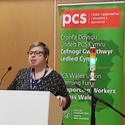
Katrine Williams is a PCS national executive committee member, Wales executive committee chair, and Wales DWP TUC secretary. She writes:
Reducing the civil service gender pay gap to 5.8% appears to be a success. But it doesn’t give the full picture. For example, women still make up 60% of the lowest paid quartile. And the impact of taking time out for maternity leave and returning to work part-time continues to have a huge impact on pay and progression for women.
Further, there has only been some small improvement to the number of women at senior grades. But what has had the biggest difference is actually the massive reduction in the proportion of civil servants at AA and AO grades, which were and are mostly women. This was at 40% in 2015 and is now 25%. So the reduction of gender pay gap is mostly not about more women getting through the glass ceiling.
Women workers have even more to fight for. And trade union militancy has been rising since the onset of the cost-of-living crisis. Years of pay restraint has driven down our pay with large numbers of our members, including many women, ending up back on the minimum wage every year.
The Cabinet Office is failing to address and PCS has rightly rejected this year’s Treasury Pay Remit. The government’s position is that starting pay in the civil service should be the minimum wage. And now they want to change how our hourly wage should be calculated: on 37 hours not 42 hours, including paid lunchbreaks per week.
All this besides the ever-rising cost of living. The rise in the energy price cap now means we risk energy bills 53% higher this winter than five years ago.
The best way of addressing the gender pay gap is to mobilise our whole union to fight for a 10% pay increase, £18 per hour starting pay, and pay restoration. Pay rises must be fully funded by Treasury (not just their 2% offer) if departments and employers are forced to find the money from existing budgets.
Women members in particular rely on jobs in local areas. So, when we fight on pay, we must also fight the attacks on jobs, offices and conditions in an overall cost-of-living campaign.