Why racist attacks won't stop me from fighting against Islamophobia
To mark Islamophobia Awareness Month, Nasrin writes about her and her family's life-long experiences of racism and the intensification of Islamophobia after 9/11 and Brexit. She also reflects on her late father and the sacrifices he and other Muslim soldiers made during both world wars.
Growing up in the 1970s and 1980s, I lived in a constant state of fear. The National Front were attacking any Black or brown person, Muslim or not. We were all the same to them.
‘P*ki-bashing’ was a common pastime of skinheads. In primary school, we were sneered at and called smelly p*kis. Stones were thrown at us on the way to school. My dad was racially assaulted by co-workers at the factory he worked at. My brothers were physically attacked, and our windows were regularly smashed with stones.
We experienced verbal abuse continuously, but we quietly accepted it all as the norm.
At secondary school, I developed a group of white friends. They and others ‘accepted’ me as ‘alright’, as ‘one of the good ones’. That didn’t stop them from attacking other Muslims in front of me, as if I didn’t feel their pain, as if I wasn’t more similar to them than other white people.
My partially blind cousin attended the same school. The children taunted her mercilessly - first for her disability, then the colour of her skin.
Decades later, my daughter was involved in a racist incident walking home from school when a white adult man called her p*ki.
As a member of Generation Z, she had been told she was born into a world of ‘diversity’ and ‘tolerance’, so she was in a state of shock and confusion. As she began to process and talk about it, she teared up - and it broke my heart.
These racist incidents only affected me and the people around me. There are thousands of people with their own stories, but you won’t hear them in the news. No, we are just terrorists and groomers. Unsympathetic and inhuman in the eyes of many British people.
My parents’ response to this hate was to just keep our heads down, stay out of trouble, and focus on our education. Migrants had a constant fear of deportation. Integration was an unrealistic fantasy.
We persevered and studied hard, carving out successful careers. Ironically, most of my family members and I work in the public sector because we enjoy helping others. We are a proud family of civil servants, teachers, doctors, dentists, drivers and caregivers.
Large-scale racism
Then, joyfully, multiculturalism became mainstream. We finally felt included and heard. Our families flourished. We grew our communities. We established mosques. We felt proud of who we were and safe to express ourselves.
We have participated in voluntary and charity work, climbing peaks, doing bike rides and running marathons for British charities. I have also organised lots of community events to bring people together.
Then things changed dramatically after 9/11 and Brexit. Blatant large-scale racism reared its ugly head once again.
Home Office figures show that recorded hate crimes in the UK jumped by 41% following the referendum. We see how this hate has fuelled the rise of the far-right, with people like Tommy Robinson making a mockery of our religion, our people, and our rights.
These political demagogues never consider Britain’s role in creating global crises that lead to conflict and then the need for people to seek asylum in the first place.
Just as far-right rhetoric has been emboldened by politicians, Islamophobia has been exacerbated by the dangerously powerful, toxic and biased media.
Muslims are demonised constantly. If all you read, see and hear in newspapers, on the TV and on the radio is that ‘Muslims are terrorists who are undermining a British way of life’, it doesn’t come as a huge shock that British people find it easy to fear and hate us.
When they say they are protecting their women and girls, these are exactly our fears for our girls. There have been increased attacks on brown women and targeting of Muslim girls, some of whom have had their hijabs ripped off. I am terrified for my family and future generations.
The ruling class has maintained systems of colonialism and capitalism by dehumanising people like me, and pitting workers against each other. But I’m an optimist. I believe that through forums like trade unions - where we talk to one another, hear each other’s experiences and points of view - we break down walls. It restores my faith in humanity.
Remembering the sacrifice of Muslims
In the spirit of the recent Remembrance Day, let’s also remember the sacrifices of millions of Muslims, who made a massive and crucial contribution to the British war effort during both World Wars, often serving in the most challenging areas of conflict.
The largest contingent of Muslim soldiers served in the British Indian Army and were recruited from the Bengal Presidency; regions that are now India, Pakistan and Bangladesh.
Muslims from other parts of the British empire also served. The tremendous sacrifice and service of these soldiers were critical to the overall Allied victory, though their contributions have often been historically overlooked. After all, nearly 1.5 million Muslims were killed in action.
Where are their memorials, where is their moment of silence, where is their respect? Most of them didn’t even get paid. They lie in unmarked graves, where even their families struggle to track them down due to the disregard for brown soldiers.
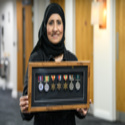
My late father was a brave and disciplined soldier: a man of principles. He fought in the British Indian army in WW2. We recently found his medals, including the King George Defence medal, the African and Italy Stars and various others. He was awarded for his role in the fight against fascism.
As a result of being a British war veteran and following the events in Kashmir with the Water Treaty and building of Mangla Dam by British construction companies, my father and others like him were offered passports and invited to England to help rebuild the nation due to Britain’s post-war labour shortage.
Despite social, cultural, climate shocks and language barriers, and facing racist attacks, he had a strong work ethic, taking any job he could find, remaining a hard-working factory labourer up until his last days, despite being a decorated war veteran.
My dad would be turning in his grave if he knew what his children, grandchildren and great-grandchildren are still facing to this day. Migrants helped to rebuild this country after the war, but are constantly blamed for its problems and threatened with expulsion.
I am proud that PCS is officially marking Islamophobia Awareness Month for the first time this year. This is providing an important space for Muslim members and our allies coming together to reject this hate and put safety at the heart of this discussion.
Being in PCS is my safe space and I encourage our Muslims who are not members to join PCS Union today so we are stronger to confront and eradicate Islamophobia.